The Brooker Group

Insights

October 22, 2026

Corporation 2.0: The Company Becomes a Network

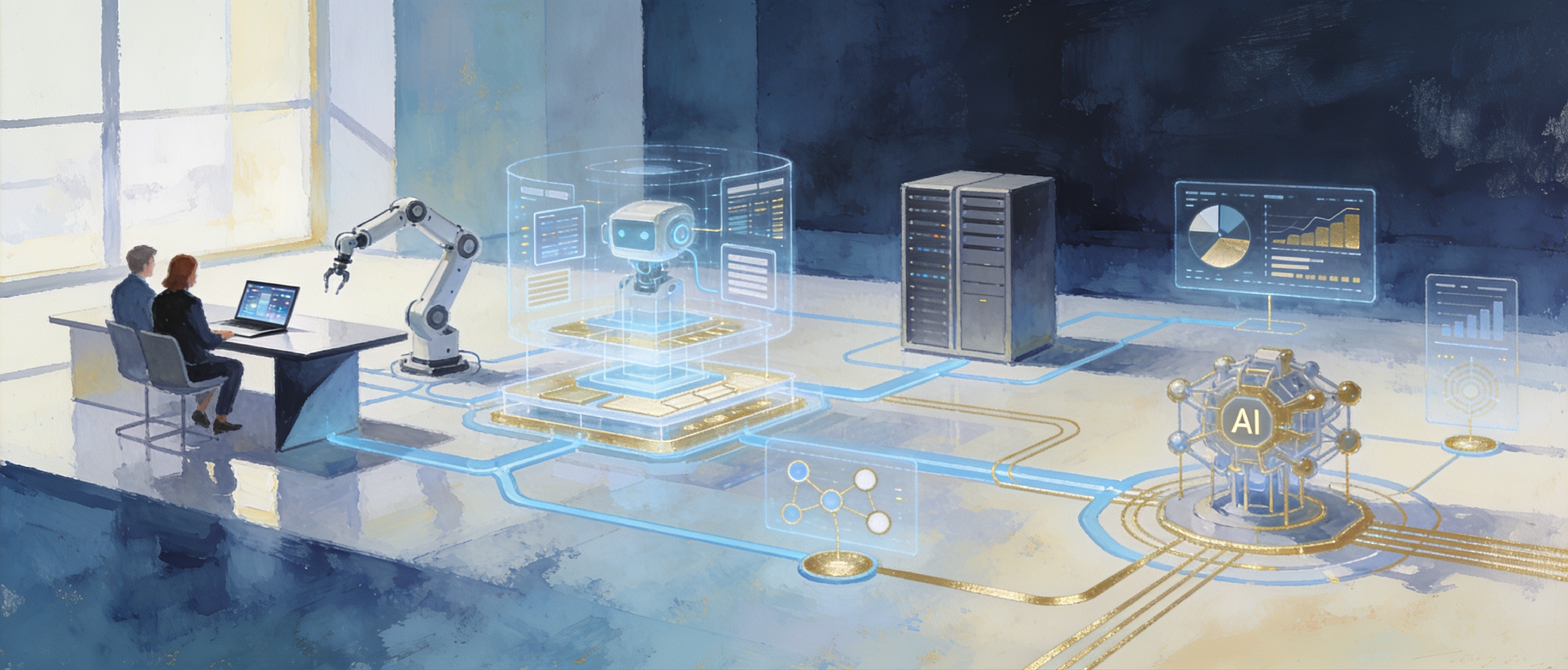
Every thesis in this series has described something being rebuilt. Industries are being absorbed into software networks. Intelligence is becoming an abundant, manufactured input. The dollar is becoming programmable. Finance is migrating onto internet-native rails. Tokenization is turning static stakeholder lists into live, coordinated ecosystems.


October 22, 2026

Tokenization Is About Coordination, Not Assets

Ask the financial industry what tokenization means and you will get a tidy, reasonable, deeply incomplete answer: putting real-world assets on a blockchain. Real estate on-chain. Gold on-chain. Funds on-chain. Bonds on-chain. Fractional ownership, broader access, faster settlement, lower minimums, better liquidity. The pitch decks all look similar.

October 22, 2026

Blockchain Is the Financial Rail Layer of the Internet

The internet was built with a missing piece. It can move information natively — text, images, video, code, messages, files — anywhere on Earth in milliseconds, at near-zero marginal cost, without requiring permission from a central operator. But it cannot natively move value.

October 22, 2026

The Dollar Is Becoming Programmable, and Liquidity Is the Market OS

The most popular macro story in the world right now is de-dollarization. BRICS nations settling trade in local currencies, central banks buying gold, China reducing Treasury holdings, the dollar’s reserve share slipping, emerging markets seeking independence from the Federal Reserve, and geopolitical rivals trying to build alternatives to the dollar system.

October 22, 2026

Intelligence Is Becoming Abundant. Scarcity Is Moving Elsewhere.

Every economic era is defined by what is scarce. Land was scarce, so agrarian wealth meant acreage. Capital was scarce, so industrial wealth meant factories, machines, banks, and finance. Oil was scarce, so the twentieth century revolved around energy security.

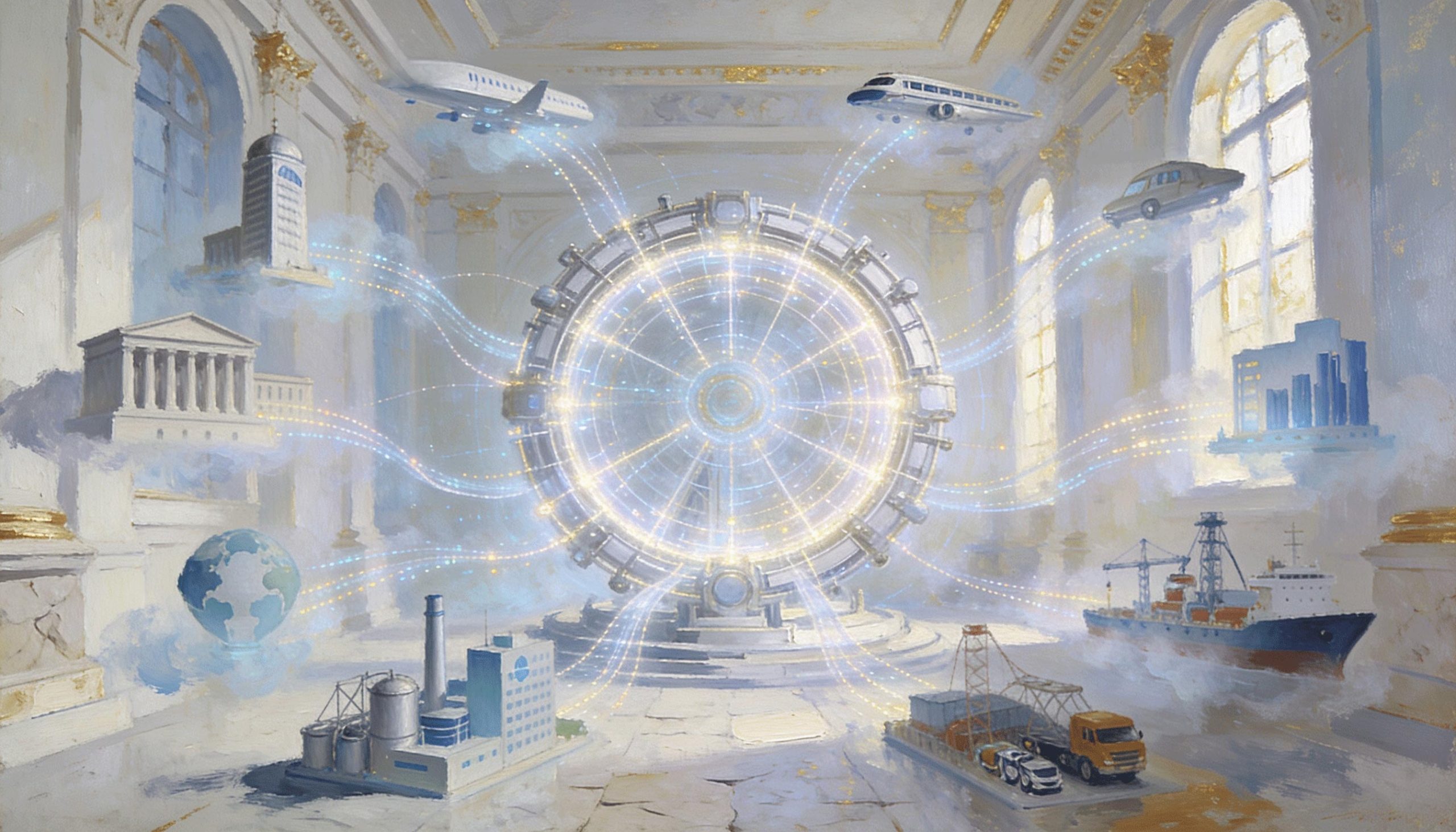
Conceptual artwork depicting a glowing digital portal absorbing global industries—including finance, shipping, aviation, manufacturing, and real estate—within a grand Renaissance hall.

June 22, 2026

Technology Does Not Disrupt Industries.
It Absorbs Them.

For thirty years, the business world has used the wrong word to describe what technology does. We say technology “disrupts” industries, as if it were a storm passing through — damaging, dramatic, but ultimately temporary. The old industry suffers, adapts, and then resumes its old shape with a few new tools bolted on.

A futuristic digital cityscape with glowing data streams and the headline “Web 3.0’s 1996 Moment,” representing the next stage of Web3 infrastructure and regulation.

September 22, 2025

Web 3.0’s 1996 Moment:
How Regulatory Clarity and Scalable Infrastructure Are Unlocking the Next Chapter

All major technological revolutions have a distinct inflection point where ambiguity and speculation give way to the clarity and commitment that ignites an era of long-term building and explosive growth. The dot-com boom, for example, wasn’t born in a vacuum; it was ignited by a specific catalyst that provided the certainty needed for capital to flow.

A futuristic digital gateway opening toward a glowing network city, with the headline “The Trojan Horse” and a subtitle about stablecoins onboarding the next billion Web 3.0 users.

October 14, 2025

The Trojan Horse:
How Stablecoins Are Stealthily Onboarding the Next Billion Web 3.0 Users

The most powerful catalyst for mass adoption is not a flashy application, but a simple utility: the digital dollar. This article will argue that stablecoins are the Trojan Horse for Web 3.0. Adopted for their practical, real-world utility, they are stealthily and irreversibly onboarding the next billion users into the new digital economy.

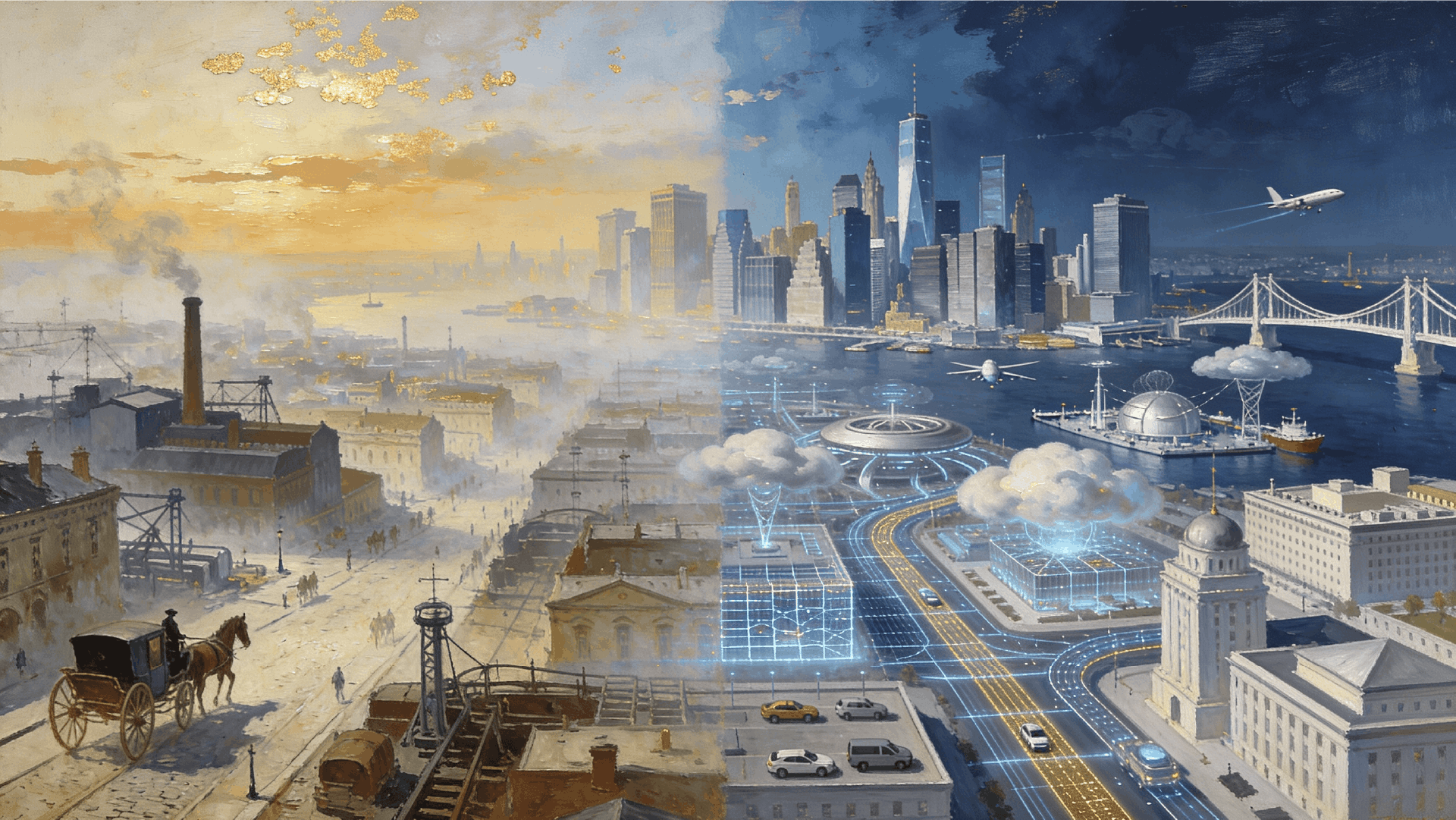
An oil-painting-style cityscape showing the transformation from an industrial past with horse carriages and factories to a modern technology-driven city with financial towers, bridges, aerospace, cloud infrastructure, and glowing digital networks.

May 21, 2025

The Macro Technology Paradigm
(Why Tech & Why Venture Capital)

Traditional asset allocation playbooks are fundamentally broken because they treat “Technology” as a standalone, isolated vertical slice of the broader market. In reality, technology is the universal solvent that targets, invades, and completely re-architects legacy industries.